

 Search


 When posed with the question if you want an intelligent dog or not, most are bound to answer “Yes.” Of course everyone wants a smart companion that can solve problems and figure things out just like in the movies. Right?
To be able to answer the question, we first have to define intelligence – there are different types of smarts, both in people and in pets. When it comes to dogs, we normally classify three types:
Instinctive Intelligence is what a dog is bred to do, and does naturally without special training. Herding breeds, for example, will often herd without being trained to do so.
Adaptive Intelligence is what a dog can learn by itself.
Obedience Intelligence is what a dog can be taught to do.
Most people think of obedience intelligence when discussing dog smarts, but there are more factors that weigh into that category than just brainpower. Some breeds are, for instance, more willing to please humans than others, and they will be easier to train.
Dogs with a high adaptive intelligence are good at figuring things out. That can be great in many situations – and not so great when the dog teaches itself to open doors and drawers.
When you decide what breed to get, think of what you really want from your dog. Do you want a high-energy brainac, or someone that will learn tricks and do what you tell them?
Which breed is smartest?
Border Collies are generally considered the smartest dogs. They rank high in all three forms of intelligence.
Afghan Hounds are considered the least smart when it comes to obedience intelligence. That doesn’t necessarily mean that they’re the dumbest when it comes to adaptive intelligence.
Cats are generally smarter than dogs when it comes to adaptive intelligence, and they’re really good at using their paws. Dogs are more willing to be trained and score higher on obedience intelligence.
Just how smart is a dog?
The average pooch can learn 165 words. The smarter breeds can learn around 250 words, and the smartest (Border Collies) over 1,000 words. On top of that, dogs have an understanding of basic arithmetic. Depending on breed they can count at least up to four or five, and they understand addition and subtraction.
Many believe that dogs don’t understand time, but that’s not entirely true. We haven’t been able to measure a dog’s perception of time, but they certainly know that some events happen in order.
Can I make my dog smarter?
Yes, a dog’s brain needs training just like a human’s. Dogs raised in a stimulating environment will learn faster and become smarter than dogs that are raised in a boring environment. New challenges and experiences help develop the brain.
 Halloween is just a week away, and while dogs may dress up and go trick or treating, we have to be cautious with what we feed them. Many children want to share, and this is a kind side that should be rewarded, but pets should not eat human candy – or decorations.
  Dogs and humans are so different, and even though we want our dogs to be happy, there are some common mistakes that are stressful for dogs. Small changes can have a big impact on the dog’s well being, and in the long run make the whole family happier.
 Buying a toy for the pooch can be much like buying a present for a toddler – the box turns out to be more interesting than what’s in it.




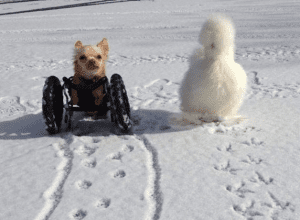

 Dog toys are important, but can get expensive. If your dog tires of toys quickly, here are some tips for getting the most out of the toys.
 There is a plethora of dog toys available, and which to choose largely depends on the dog. Some dogs tear through everything but the most chew-resistant in minutes, and others carry the same soft squeaky duck around for years.