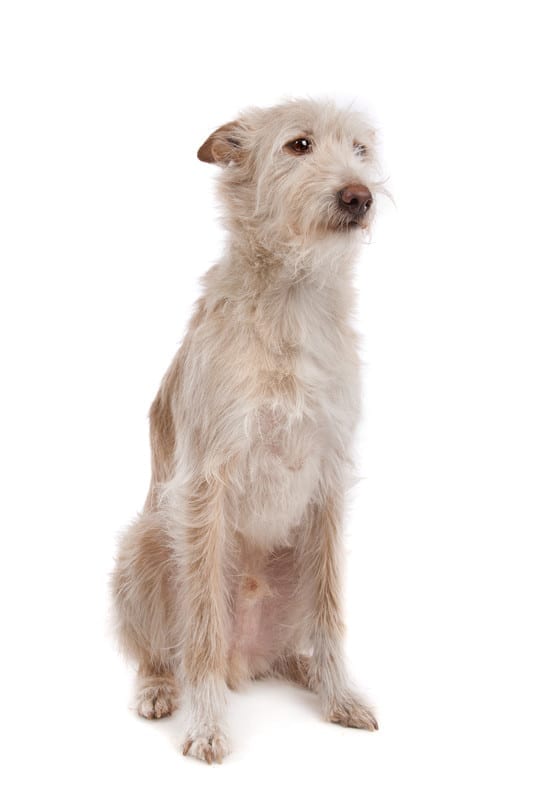
Sunshine story: Penny the Vizsla is home after 2400 mile road trip!

Penny the Viszla

Penny is a 7 month old Vizsla who just came home after the adventure of a life time. She got lost in Royal City late December, and while her owners did everything to find her – including creating a Facebook page dedicated to finding her and bringing her home – Penny was on a road trip.

A kind truck driver saw her and picked her up, and she tagged along with him all the way to Pittsburgh, Pa. When his job was done he took Penny to an animal clinic where they scanned her microchip and were able to contact their owners.

Of course, Penny’s adventures weren’t over, because by now she was far from home. The puppy’s luck held and Alaska Airlines flew her home for free.

Make sure your pets have identification, and that your name, address, and phone number are updated. Even the most well behaved pet can get distracted by something. It only takes a couple of seconds for them to dash down the road in pursuit of a bird, squirrel, or something else.

Sunshine story: dog saves owner’s life

A few days ago, Darky, a labrador and collie mix, became a hero. Darky was on a walk with his owner Arthur McGarvey along the fields near their home when Mr. McGarvey collapsed. Darky didn’t lose any time – he ran to the road, barking and prompting drivers to come investigate.

Darky’s strange behavior made motorists pull over, and the persons who stopped quickly spotted the man on the ground. Without Darky no one would have seen Mr. McGarvey, but now the passers by could call for help, and keep him warm until paramedics arrived.

Doctors say Darky’s quick response, getting help in the minutes immediately following the stroke, might have saved Arthur’s life and definitely boosted his chances to make a full recovery. The quicker help and necessary medications are given after a stroke, the better the chances of recovery.

Most people who suffer a stroke have less evident symptoms than Mr. McGarvey. If you think that you or someone close to you has a stroke, call 911 immediately. Also, check the time so you’ll know when the first symptoms appeared – this is important for correct treatment. Common signs include:

  • Face drooping. Ask the person to smile and see if the smile is uneven.
  • Numbness or weakness of a leg, arm, or face. Ask the person to raise both arms and observe if one arm drifts downward.
  • Speech difficulty. Ask the person to repeat a simple sentence.
  • Sudden confusion or trouble understanding.
  • Sudden trouble seeing in one of both eyes.
  • Sudden trouble walking, loss of balance, loss of coordination, or dizziness.
  • Sudden and severe headache without known cause
Darkey the dog with family
Image of Darkey with family from mirror.co.uk

Why do people look like their dogs?

Most Afghan Hounds will need a Large PlexiDor Dog Door and are thought to look like they have long locks of hair like some people look like their dogs.No matter how much we like dogs, most of us don’t want to look like a dog. There are exceptions, of course, but the vast majority of humans want to look like a human. Still, everyone has seen someone with an uncanny likeness to their dog. Many dog owners even see something of their dog in their own face in the mirror.

It would be easy to dismiss this as one of those things that aren’t real, but when shown a photo lineup of random people and random dogs, test subjects are able to match owners and pets.

It would be easy to dismiss that with people seeking out pets that have something in common with themselves. Maybe men would be more likely to have large dogs and women more likely to have toy breeds, or maybe women with long hair would be more likely to have dogs with long hair and floppy ears?

The ability to match strangers with their pets remain even when these types of characteristics are ruled out.

A Japanese scientist recently set out to solve the mystery. In prior tests he has proven that test subjects can match photos of owners and their dogs by looking at their faces – and see that arbitrarily coupled dogs and people were fake pairs. This time, 502 students were presented with 40 human faces and 40 dog faces.

When shown the entire faces, 80 percent could pick the real life pairs. The interesting thing is that when shown only eyes of humans and dogs, 74 percent could still pick out real life pairs. The scientists ran the test again, and in a second group of test subjects 76 percent could pick out the pairs just looking at the eyes.

Thus far, no one knows how this works, but there is something in the eyes of humans and dogs that can show to complete strangers that they belong together.

Read more here.

New laws for animal protection

With the new year comes some new laws and statutes for animal protection. Some are practical, others sound a bit goofy but are clearly needed.

It might seem self evident that getting close enough to lions, tigers, and other big cats to take a selfie is a bad idea. Self-portraits with this type of animals have still become more and more popular online, and starting February 2015 it will be illegal to pose for this type of photo in New York. The new rule specifically prohibits contact between members of the public and big cats at animal shows.

New York is one of over 20 states with a ban on private citizens owning exotic animals, but all over the country it is believed that more exotic pets live in American homes than in American zoos. Seven states have no requirement of a license or permit to keep exotic animals. In these states you might need a license to own a dog, but you can buy a lion without thinking twice about it.

Naturally, many who own exotic pets are responsible and give the pets great care, others are less careful. There is no firm definition of the term exotic pet – in some states it refers to any wildlife kept in a human household, or to a pet that’s more unusual than a dog or cat.

In 2015, New York also makes it illegal to tattoo and pierce pets. This law allegedly came about a after a woman attempted to sell gothic kittens with piercings, and a man tattooed his dog. The only exception is markings done by a veterinarian for a medial reason or identifications.

On the other side of the USA, California takes a stand for farm animals. A new law requires that egg-laying hens, breeding sows, and veal calves have enough space to move around. It is no longer allowed to keep them in cramped cages. California also has a law that extends the space requirements for egg-laying hens for out of state suppliers.

Reasons to adopt an older dog

Adopt an older dog like this Portuguese Podengo when you are considering making an addition to your family

There are many reasons to adopt an older dog instead of a puppy. While puppies are adorable and it is hard to resist puppy breath and puppy kisses, they are also a lot of work. If you’ve decided to start the new year with getting a pet and you want a puppy, think it through and make sure you really have the time and energy needed for raising a little dog through the puppy and teenage stages. 

If you answer no to the 24-7 job of having a little one, consider visiting a local shelter or rescue and give an older dog a new chance on life. (There are often puppies there too, of course.)

Many dogs who end up in shelters and rescues are there through no fault of their own. In many cases the owner’s family, living situation, or financial situation changed, and the pet finds itself homeless. Older dogs are often the last to be adopted – and the first to be euthanized.

When you see a pet in a shelter, remember that the dog is stressed. Many shut down and become shy and unresponsive, others are hyper alert, ready for any chance to get away. The personality can change a little when you get home and your new pet settles in, and this process can take a couple of weeks until he or she figures out that they’re home and safe. Once the dog has settled in, you’ll have a devoted friend.

When you adopt an older dog you know important things like their final size and grooming requirements. Older dogs are far less likely to be destructive chewers than younger dogs – and if they chew on something it’s a training problem and not a teething problem. Older dogs are also more likely to be house trained than puppies. If the older dog isn’t house trained or has accidents in the new home, they have the physical and mental ability to “get it” quickly while a young puppy just can’t hold it.

Older dogs require exercise just like younger dogs, but they might not have the super-explosve energy that wants you to play ball for five hours and then run a marathon. Seniors often like to chill out.

Many believe older dogs can’t learn new tricks. This isn’t true. Training is great mental exercise for your furry friend, and it helps build the bond between you.

To find your new best friend, visit local shelters or rescues, or check petfinder.com!

Keep your pets safe over the New Year holiday

The New Year holiday is just around the corner, and many Americans will celebrate the birth of the new year with fireworks, firecrackers, and even gunshots. While you and your neighbors celebrate, keep your pets in mind.

Cats, dogs, and other pets generally don’t like these loud noises, and the bright flashes of fireworks can add to their terror. Even dogs and cats that are normally calm can panic and run in an attempt to find safety from the perceived threat.

Keep your pets inside. If they choose to seek out a dark corner or hide under the bed, let them be. Never underestimate a frightened pet’s ability to flee. If you have visitors coming and going it’s a good idea to keep the pets separated so they can’t get out the front door.

If your family falls into the category that fires actual guns to celebrate the new year – fire into the ground, never up in the air. What goes up must come down, and bullets fired up in the air have been known to cause injury and even death on their return to the ground.

Make sure your pets have ID badges on their collars, and that they’re microchipped. Naturally, if you go to watch a fireworks display, leave your pets at home. Don’t leave them in the car.

Have a happy and safe New Year’s holiday!

Five New Year’s Resolutions for your pets

This Coton de Tulear wants you to keep the New Year's resolutions for your pets and needs a medium PlexiDor dog doorMany use the new year holiday to reflect on the year that has passed, and to look forward on what they want to change. Top new year’s resolutions for humans often include to exercise more, lose weight, and stop smoking. The new year can be a fresh start for your pets too. 

Here are five ideas for New Year’s Resolutions for your pet.

1. Measure your pet’s food. Every time

Over half of pets living in the USA are overweight. Measure your pet’s  food every meal to make sure you’re not overfeeding your furry friends. Keeping a healthy weight can decrease the risk of serious diseases and increase the pet’s life span.

2. Do something new together

It’s easy to get stuck in a rut. Try something new – go hiking, take your dog to dogs, or try a dog sport. This is fun, a great way to bond, gives your pet important socialization, and you both get some exercise.

3. Groom your pet and brush their teeth

A daily session does more than help your pet look great – it builds the bond between you. Brushing your pet can help alleviate your stress, and show him or her that you love them. Brushing teeth can be more of an ordeal until you both get used to it, but keeping pets’ teeth clean is important to their overall health. Use a toothbrush and toothpaste meant for pets.

4. Teach your dog some new tricks

Mental stimulation helps keep your pets healthy and happy. Practice tricks your dog already knows, and learn something new. Puzzle feeders and toys are also great to help keep your pet entertained and alert.

5. Check your pet’s tags and microchip information

When something changes – be it a phone number, an address, or even your name – there’s a lot to think about, and the pet’s information is often forgotten. If any of your information has changed, update your pet’s tags and microchip information.

Sunshine story: dog gets 3D printed legs

Derby the dog was born with deformed and disabled front legs, and would get around through dragging himself with the small forearms. His foster family got him a wheelchair, and while that worked well, they felt that he could get something even better. Thanks to technology and the new 3D printing technology, Derby got a Christmas miracle and is now able to run on newly created legs.

3D printers have been used to make cost efficient limbs for humans, but Derby is the first animal to get 3D printed prosthetics. The materials and tools that are developed for humans don’t always work on animals. It is, for example, easy to scan a person’s leg to fit a prosthetic, but not as easy to scan a dog’s. The company making the leg molded a cast of fiberglass and scanned that into the printing system.

Another problem is teaching the pet to use the prosthetic, and as you can see from the video, Derby has succeeded quite well – and he is becoming an Internet phenomenon.

//youtu.be/uRmoowIN8aY

2014 puppy names

Sleeping puppy in a basket with a blanket is dreaming of the most popular 2014 puppy namesEach year, the website vetstreet.com compiles a list of most popular names for puppies and kittens. The 2014 puppy names lists were recently released. 

For female puppies, the top three remains constant. Bella is the number one name, and has kept that position since 2006. The first book in the wildly popular Twilight saga was released in 2005 and the heroines name is Bella. That could be a coincidence, or maybe not… The other names in the top three – Daisy and Lucy – have also held their positions for years.

When it comes to the boys, Max has been the number one name for nine years. The second most popular name used to be Buddy, but this name was kicked down to a number four position in 2014. Instead, Charlie and Rocky have filled out the second and third spot.

Top 2014 puppy names for girls are:

  1. Bella
  2. Daisy
  3. Lucy
  4. Sadie
  5. Molly
  6. Lola
  7. Sophie
  8. Zoey
  9. Luna
  10. Chloe

Top names for boy puppies are:

  1. Max
  2. Charlie
  3. Rocky
  4. Buddy
  5. Cooper
  6. Duke
  7. Bear
  8. Zeus
  9. Bentley
  10. Toby

Don’t give pets as surprise gifts

Two gray tabby kittens peaking over the edge of a red basket would make poor pets as surprise giftsChristmas is a holiday of giving, but if you’re considering giving away a puppy, kitten, hamster, rabbit, ferret, guinea pig, or other animal, pause and think about it some more. Pets as surprise gifts are rarely a good idea.

Pets give immense joy, but they require commitment too, and once the holiday is over shelters all around the country will overflow with abandoned animals.

If you really want a pet and everyone in the family is onboard with the idea, you can go to a shelter and adopt one once the holidays are over. For Christmas morning, you can give the kids a stuffed toy as a promise you’ll go to the shelter and look.

Every pet deserves a good home where they are loved and receive proper care.

If you want to surprise your own children with a pet, be aware that you as an adult will have the final responsibility to care for it. This includes ensuring the children respect it and aren’t too rough with it. If you want to surprise someone else’s child with a pet, discuss with the adults in the family and make sure everyone’s on the same page.

Christmas morning isn’t a good time for new pets

Even if all the adults in the family are on the same page, Christmas morning isn’t the best time a year to get a new pet. Everyone’s tearing into gifts, there are loud toys, potentially dangerous ribbons everywhere, chocolate, and general chaos.

A new pet needs to land in calm environment where he or she can feel safe. You don’t want a frightened, cowering animal that is overwhelmed by all the sudden attention, children squealing with excitement, and almost battling each other to hold it.

Important things to consider before getting a pet:

Different animals have different tempers and needs. Research the type of pet you’re considering, and make sure the animal is right for your family. If you’re getting a dog, research breeds and get a breed that fits your lifestyle.

  • Do you have enough space? Enough money to get the equipment you need?
  • Are you prepared for a lifetime commitment? Even small pets like guinea pigs can live for five years. Dogs can live for fifteen years, and some other types of pets live for decades. If you can’t deal with someone being dependent on you every day for that amount of time, don’t get a pet.
  • All pets require attention, care, and training. Discuss the pet’s schedule with the family.
  • If you’re getting a dog, he or she will need walks every day. Puppies need to go out every time they eat, sleep, or play – even if it’s raining or in the middle of your favorite TV show.
  • Make a budget. Include food, toys, treats, vet costs, kitty litter, straw, and whatever else your new pet will need.
  • Plan for emergencies. Who can care for your pet if everyone in your family needs to travel somewhere?
  • Create an emergency fund in case something happens and your pet needs urgent care.
  • A child should not be sole caretaker of a pet. As an adult, the pet is your responsibility.

Four important things dogs don’t like

Some human behaviors translate poorly into the world of dogs, and they often cause accidents or bites. Here are four things we humans tend to do that dogs in general don’t like.

Four Things Dogs Don’t Like:

1. Misreading the dog’s signals

A vast majority of dog bites, especially when children are involved, happen because humans misread a dog’s body language. Parents can think something is cute, but the dog just wants to get away, even if it knows the child. The follow signs should be put in context, of course, and each sign below is usually accompanied by other signs of stress.

  • Licking nose and lips
    A stressed dog licking nose and lips looks very different than when you feed your dog a treat.
  • Yawning
    A stressed dog often yawns repeatedly, with intensity. Some dogs even yawn when they need to go out.
  • Panting
    Of course dogs pant to cool off, but it is also a common sign of stress.

Other common signs include looking away, turning away, pinning back the ears with a tense facial expression, low body posture, leaning backward, and tension.

2. Hugging

Hugging is a human phenomenon. Many dogs get used to being hugged by their family members and can even learn to appreciate it, but there are also dogs that never get used to it.

Hugging a dog can make them feel threatened or challenged.

There are countless news stories where a child has been bit by the neighbor’s dog – or even the family’s own dog – and the parents say, “It came out of the blue. She was just hugging the dog.” This misunderstanding between the species ends with a traumatized child and euthanized dog.

3. Patting on top of the head

While most dogs love to be petted, that’s not the same as going up to a dog and patting them on the top of the head or on the face. Teach your children not to do this – especially not to dogs they don’t know. While most dogs tolerate it, they might not like it, and some perceive it as a threat. They don’t like a hand coming at them from above any more than a human would.

When you meet a dog, crouch and turn away a little – this means that you’re not a threat. When the dog comes up to you, pet it on the side.

4. Staring into a dog’s eyes

Most dogs are okay with gazing into their owner’s eyes. However, don’t approach a dog you don’t know and stare into their eyes – this is a challenge in doggie language.

Holiday decoration safety tips for pets

Puppy in Santa hat thinking about safety tips for petsHoliday decorations are a big part of the season, and lights and cheerful colors spread joy in the winter darkness. Everything new in the house brings new dangers to pets as well, and here are some safety tips for pets on little things that can make a big difference.

The tree

Whether you use an artificial tree or a reason, make sure it’s securely anchored so your pets can’t knock it over. Especially cats are tempted to climb into the tree. Also clean up any tree needles regularly – they’re sharp and can get stuck in your pet’s throat or paws.

Tinsel

Pets love to play with and eat tinsel and ribbons. These can cause a lot of damage if swallowed, and even require surgery. Keep tinsel and ribbons off the floor.

Baubles

Many pets, particularly cats, see baubles as irresistible play things. Try to use decorations that won’t shatter if they hit the floor, and that aren’t too small. You don’t want your pet to accidentally swallow a decoration.

Power cords

Protect cords so your pet can’t play with them or chew on them.

New house plants

Many of the season’s house plants are poisonous. Most people think the poinsettia is very dangerous, but it is only mildly toxic to cats and dogs. Pets shouldn’t be encouraged to eat it of course, but the poinsettia’s reputation is quite exaggerated. Mistletoe, rosemary, and holly can be dangerous to cats and dogs. Keep them out of reach, and contact a veterinarian if you think your pet has ingested any type of holly.

What pet owners really want to do for the holidays

The holiday season is great for visiting with friends and family, but vetiq.com made a survey to find out what pet owners really want to do for the holidays. The results are both thought-worthy and amusing.

A vast majority – 96 percent – answer that they would prefer to spend the holidays at home alone with their pet instead of leaving their pet at home to celebrate with in-laws.

85 percent of pet owners think a kiss under the mistletoe is okay for pets too. 85 percent also think their pets have been nice during the year. The survey doesn’t report whether the 15 percent of naughty pets are the same 15 percent that won’t get kisses…

Only 24 percent of pet owners plan to travel with their pets during the holiday, and 97 percent of those who do will go by car.

54 percent say Santa Claus best describes their pet’s holiday personality. 32 percent say Frosty, and 14 percent The Grinch.

//youtu.be/_utgDQRUYlo

Cat gets personal trainer – Dennis the dog

Ulric is Britain’s fattest cat and weighs as much as an average three year old child. The Norwegian forest cat has been placed on strict diets and even entered a pet slimming competition where everything he ate was weighed. He still didn’t lose any weight. 

When his owner realized Ulric was quite good at stealing his sister’s food she tried to take him for walks to lose some weight, but he refused to go along with that.

What is a cat lover to do?

Uric’s owner enrolled help from a dog. Dennis is a five month old pug-cross who has turned into Ulric’s personal trainer. The puppy chases the cat around the yard, plays, and wrestles, and after three months with the dog, Ulric has lost more weight than in 16 months of dieting.

//youtu.be/iJYgo1a-rhc

Myths around dog bite force

Dog bite force myths need to be debunked. Some people who are afraid of dogs will claim that certain dog breeds can exert over 2,000 pounds of pressure with their jaws. It’s an impressive number – and an enormous exaggeration. They bite harder than a human, but not as much harder as one could think.
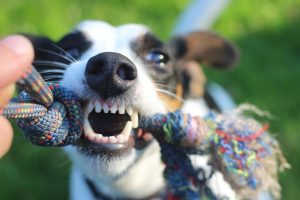
There are many myths surrounding dog bite force

The average human can bite down with a 120 pound force. A grown up man can reach around 150. It’s not a lot, but being bit by a human will still hurt and do damage.

It is more difficult to measure the exact bite force of dogs, because they won’t bite as hard every time, and they will bite harder if they’re provoked. The force they can chow down with depends on the shape of the jaw and the size of the dog’s head

One test measured three dog breeds that often strike fear in those afraid of dogs; American Pit Bull Terriers, German Shepherds, and Rottweilers. (If you are afraid of dogs, you should know that all dogs can be good and all dogs can be bad – it depends on the owner and not the breed.) The average dog bite force turned out to be 269 pounds of pressure.

The Rottweilers were the strongest and topped with 328 pounds of bite pressure. German Shepherds came in second with a 238 measured dog bite force, and the American Pit Bull Terrier came in third with 235 pounds of pressure.

How does that measure compared to cousins in the wild?

Dogs are at a disadvantage.  A wolf’s normal bite force is around 400 pounds. If it is protecting itself, a large wolf can bite down with over 1,200 pounds of pressure.

Large cats are very strong. A Jaguar can reach 700 pounds of pressure, and Siberian Tiger 950.

You might not think of Hyenas as strong, but even though they are scavengers they also hunt, and most of the time they chase down their own food. A hyena can bite down with 1100 pounds, and they’ve been known to chase off lions to claim food.

When it comes to our primate cousins, the Gorillas are the largest and strongest. An adult male gorilla can weigh 400 pounds, and bite down with a strength of 1,300 pounds per square inch. Now, that doesn’t mean that you should fear gorillas – they are herbivores, peaceful, and shy.

Many who visit the south are afraid of alligators, and it is certainly wise to abide by regulations and warning signs. The American Alligator has a bite strength of 2125, sharp teeth, and powerful muscles to hold their prey. This still pales compared to the Nile Crocodile that can close their mouths with a pressure of 5000 pounds.

While alligators and crocodiles can run fairly quickly on land,  it’s nowhere near what urban myths claim. They can lounge out of water at a fairly high speed, but the land speed record is around 10 mph, and they grow tired quickly when on land. Alligator attacks are extremely rare. The risk of being injured in an unprovoked alligator attack is around one in 2.4 million.