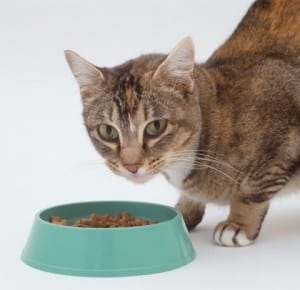
Kitty personalities

Cats have personalities just like peopleWe mentioned yesterday that June is Adopt a Shelter Cat Month. If you’re thinking about adding a kitty to the family it is be a good idea to consider the cat’s personality. They are as individual as we are, and matching personalities can be a big help when it comes to getting along.

ASPCA has put together a list with nine common cat personalities. This is more fun than serious, of course, but it serves as a good reminder that cats are individuals.

1. The Private Investigator

The P.I. cat doesn’t like trouble. It is good at staying hidden. It can vanish without a trace and reappear in the most unexpected places. This type of cat is likely to sleep with one eye open and constantly keep an eye out for danger.

2. I’ll Love You Later

This type of cat will love you from a distance, probably for a really long time, and the bond develops gradually. When the cat decides it’s time you’ll be subjected to intense head butting, purring, and napping on your lap.

3. Cuddle Me Now

These kitties are love bugs. There will be abundant purring, rubbing up against you, and demanding to be petted. If these cats could speak, they would say, “Adore me.”

4. The CEO

The CEO thrives on routine and order, and almost live on a schedule. He or she will put you on the to-do list, but you’ll have to wait your turn.

5. The Side-Kick 

The Side-Kitty-Cat loves to be with you and makes a great constant companion, but can also enjoy some “me-time”. If you want someone to share adventures with, this is a perfect choice.

6. The Helper

These cats love to be around their human, and live to help with the strangest things. If you’re cooking, the cat will be right there. If you want to use the computer, you’ll find the helper sleeping on the keyboard. The Helper generally feels that personal space is overrated.

7. The Golden Cat

Team player that pulls its own weight in whatever it perceives needs to be done. The Golden Cat is likely to do what you expect from it, and it likes to be pampered at the end of a long day of doing the right thing.

8. Wild Thang

These cats have a wild streak, and they’re pretty much the opposite of the Golden Cat. If you want a companion that’s always up to playing, breaking rules, and challenging limits, this is the kitty for you.  Having a Wild Thang can be exhausting, but also infinitely rewarding.

9. The Commander

The Commander Cat has a very clear perception of who’s the boss, and it loves to lead. It is super confident and demands respect and admiration. It will make time for you, but it will also make sure you know who’s in control.
Cats might be even smarter than we think

CatThere’s no doubt that cats are smart. They are quick to learn and have evolved for thousands of years to observe the world and make intelligent decisions. A cat’s brain structure is actually about 90 percent similar to a human’s.

According to Psychology Today, cats have around 300 million neurons while a dog has around 160 million. Cats also have more nerve cells in visual areas of the brain than humans and most other mammals. In plain English that means that they have a well developed center for rational decision making and complex problem solving. This area of the brain is involved in planning, interpretation of communication, and memory.

If cats are so smart, why don’t we have service cats leading people with impaired vision, or police cats finding hidden drugs?

Cats find motivation in discovering personal benefit. “What’s in it for me?” They base decisions on what to do and when depending on what it can get them. They are more impulsive than dogs, and less patient. If something doesn’t reward them, they’ll move on and do something else.

Dogs are more socially adapted and will work for a treat or to make their human happy. Cats can solve more difficult problems, but only if they feel like it.

World’s oldest cat turns 24

Poppy is a British kitty living in Bournemouth with her family consisting of four humans, four other cats, a hamster, and a rabbit. She recently celebrated her 24th birthday with a cake made from cat food, and is the world’s oldest living cat.

She has lived through four US presidents and still rules the house, but her age is starting to show; she has lost her hearing and vision. Though, the family says she is still quite feisty and defends her food from the other cats.

Poppy likes canned and dry food, KFC chicken, kebab, and fish and chips.

The oldest cat ever recorded was named Creme Puff and lived in Texas. She became 38 years old.

Poppy is the world's oldest now living cat and recently celebrated her 24th birthday.
Image from www.nbcnews.com

Kitty cam success

KittensWhen John Bartlett set up a webcam to watch his foster kittens, he did not expect to become a worldwide phenomenon. His camera shows kittens eating, sleeping, rolling around, and other pretty uneventful stuff that cats do.

The camera has become a great success; the website komonews.com reports that Bartlett has hundreds of people watching sleeping cats for hours.

Watching the cats help people all around the world de-stress. People Magazine posted a link to his site, and and he now has over 20,000 regular viewers.

The cam has led to even more than that: cat lovers have started talking in chats while watching the footage, and recently a convention of cat fans from all around the globe met in Seattle. The web cam inspired people to come all the way from Australia to talk about cats.

Barlett fosters for Purrfect Pals, and his goal with the kitty cam is to get attention for the rescue and the important role fosters play in the lives of homeless pets. He says every cat that has been featured on the camera has been adopted, and he has found homes for nearly 200 kittens.


Five Frequently Asked Questions about Cats

Cats are curious and sometimes act in ways that can drive humans crazy. They don’t do it on purpose; being naughty just sort of happens. Here are answers to five frequently asked questions about cats.

Q: Why does my cat push things down from my shelves?
A: Cats are curious, and easily bored. Your cat probably wants something to do. Even if there’s a plethora of cat toys around the house, they might have grown old and boring, and your kitty might want something new. Take time to play with your cat, and invest in some fresh toys.

Q: Do cats wag their tails when they’re happy?
A: Cats aren’t like dogs, and they normally don’t wag their tails because they’re happy. On the contrary, a cat swishing their tail indicates agitation. They wag their tails if they’re annoyed or see something that doesn’t please them. Not the best time to pet the cat!

Q: If a cat sleeps on a person’s lap, does that mean they like the person?
A: Yes. Sleeping makes a cat vulnerable, and sleeping on your lap means that you are trusted. As a bonus, your lap is probably warm and comfortable.

Q: Do cats really have a great sense of direction?
A: Some cats do, and can find their way across amazing distances. Don’t rely on it. Keep a collar on your cat with a tag, and microchip your feline friend. The outdoors can be intriguing and overwhelming for indoor kitties getting out, and even the most experience outdoor cat can get into trouble.

Q: Why does my cat bite me?
A: Cats bite for a lot of reasons. It might be because of play aggression or over stimulation, but also a way of saying, “Stop that.” Think about what you’re doing when your cat bites you.

Cattle dog watches over disabled kitten

Ralphee is an adorable kitten with feline cerebellar hypoplasia. Those big words translate into, “neurological disorder that affects motor skills.” It shows in jerky and uncoordinated movements.

Many cats with this condition falls often and has trouble walking. They also suffer tremors. The condition can come from a bacterial or viral infection, malnutrition, poisoning, injury, or an accident. The cat can learn to compensate for the disease, and can live a fairly normal life with a normal life span.

When it comes to Ralphee, he is lucky. He was rescued from a horse stable, and now he has his very own cattle dog to look after him. Love and caring really spans the species. Ralphee might not have the physical grace of many other kittens, but he is cute as a button, healthy, and filled with mischief.

//youtu.be/f31m5-5-xUY

Can cats see in the dark?

CatWhen a cat zips around the house in what appears to be total darkness to us, he or she probably sees pretty well. They can’t see in complete dark, but they see well with only a sixth of the light humans need.

This night vision ability comes from their hunting habits; cats normally move about in the twilight of dusk and dawn, and sneaking up on prey requires the ability to see.

Cats have muscles around their iris that can pull it to a slit in bright light, and open very wide in low light conditions. They always maximize their use of any light available. They also have a reflective membrane called the tapetum lucid that takes available light and reflects it. This is also why a cats eyes can seem to glow in the dark.

Pet Guinness World Record Holders

Many dream of getting into the Guinness Book of Records, and some records are right out weird. Here are some pets who succeeded with unexpected records:

1. Longest tongue
Puggy is a male Pekingese holding a record for current longest dog tongue. His tongue measures 4.5 inches, which is very long for a Pekingeses. The longest dog tongue on record overall belonged to a boxer whose tongue was 17 inches long.

2. Most tennis balls in mouth
Many dogs like tennis balls. Golden retriever girl Augie likes them more than most do; she has the record for successfully gathering and holding five tennis balls in her mouth at the same time.

3. Longest cat
The world’s longest cat is called Stewie, and he measures 48.5 inches from the tip of his nose to the end of his tail bone. (That’s just over 4 feet.)

4. Most flying discs caught
This record goes to Rose, a Labrador – Border Collie mix. She can catch and hold seven separately thrown frisbees without dropping one.

5: Most balloons popped
Anastasia is a Jack Russell Terrier who likes to pop balloons. She got 100 balloons in 44.9 seconds.

6: Highest jump
Cinderella May is a greyhound who likes to jump. She clears 68 inches (almost 5.7 feet).

7: Water glass balancing
Australian Shepherd/Border Collie mix Sweet Pea holds the record of “most steps walked down by a dog facing forward while glancing a 5-ounce glass of water.” She made it ten steps.

8. Soda can balancing
This record also goes to Sweet Pea. She walked 100 meters with a can balanced on her head in two minutes and 55 seconds.

9. Loudest purr
Some cats purr loudly. Smokey purr loudest of them all with a measured 67.7 decibels. He has also been recorded with a 92.7 decibel purr; equivalent to a hairdryer.

10. Dogs skipping rope
The Super Wan Wan Circus in Japan is the home of Uchida Geinousha’s dogs. They are the main attraction, and hold the world record for most dogs skipping rope with 13 dogs at the same time.

//youtu.be/YtwPzyppOyY

Slimkitty, new blog for cat lovers

Slimkitty is a new blog for cat lovers, inspiring cat owners to exercise their cats and make sure they have the right types and amounts of food to keep kitty’ weight down. 

58 percent of cats in the US are overweight – 5 percent more than the corresponding percCatentage for dogs. At the same time there are ten percent more obese cats in the US than there are obese dogs. Being overweight can lead to a row of health problems in the cat, such as diabetes and joint problems.

Slimkitty is a sister site to slimdoggy.com. The latter contains everything from ratings of dog food to fitness and fun, and the intention is that slimkitty.com will hold the same position, but aimed at cats.

Cats and dogs have completely different forms of metabolism, and this makes it harder for cats to lose weight. Cats cannot go on crash diets. If a cat’s food intake is significantly and rapidly depressed there’s a risk for Hepatic Lipidosis, a potentially life-threatening condition.      *These websites no longer exist

Can cats eat dog food?

eating catCats should not eat dog food. Dogs can eat cat food just fine, but cats should not eat dog food. Cats and dogs are more different than meets the eye, and they have vastly different nutritional needs.

Dogs have developed side by side with humans to a point where they can eat most of the things we eat and digest. They are considered omnivores, which means that they are able to digest carbohydrates, and they can survive on plant based foods. That doesn’t mean that dogs prefer meat to vegetables and other plants, or that a diet based completely on plants would be nutritionally adequate, but they can survive on it. A cat cannot.

Cats are carnivores. That means that they cannot live unless they eat meat in some form. One major difference between dog food and cat food is the percentage of meat.

Other differences between cats and dogs include the ability to handle vitamins and amino acids. Dogs, for instance, have the ability to break down organic pigments from plants called carotenoids and convert them into active Vitamin A. Cats can’t do that.

Cats have to get Vitamin A already converted by some other animal. That is, they have to eat the meat from some animal who already converted the carotenoids to active Vitamin A. This is one of the reasons most carnivores don’t eat other carnivores; they need to eat animals who live off plants in order to survive.

Arginine is another big difference between cats and dogs; it is a building block for proteins and cats have to get it with every meal. Dogs produce an enzyme that helps them produce Arginine, and they only need to get a little with their food.

Taurine is an amino acid distributed through the heart, retina, and other organs. Dogs produce their own, but cats must eat it, and it is not present in any plants.

There are more examples of substances cats must get through their food, such as niacin and arachidonic acid.

Lilies and cats

Lilies are beautiful, and in springtime many yards hold an abundance of them. They’re also common in many Easter flower arrangements. While not particularly dangerous to humans or dogs, some types of lilies are poisonous to cats. This article will tell you what kinds are the most dangerous to cats, and what to watch out for.

Around Easter time, the Easter lily is a welcome guest in many homes. These flowers are very poisonous to cats, and it goes for every part of the plant. Leaves, petals, stems, and pollen are all poisonous. If you see your cat eating or licking an Easter lily, even if it’s just nibbling a leaf, call the vet. Cats can also accidentally ingest the pollen while grooming, and even such a small amount can lead to kidney failure.

Symptoms develop in six to twelve hours after exposure, and the signs of poisoning include:

  • Vomiting
  • Loss of appetite
  • Dehydration
  • Lethargy

Some cats also stagger, become disoriented, or suffer seizures.

Easter Lilies are dangerous to cats

If your cat ingested any part of an Easter lily, it needs treatment at once. There aren’t any antidotes to lily poison, and the vet will administer drugs to bind the poison and give intravenous fluids to flush out the kidneys. They will also monitor the kidneys through blood testing. If the cat gets treatment quickly, all this will be easier on both the pet and your wallet.

Other types of lilies known to be poisonous to cats include Tiger lilies – common in yards – Day lilies, and Asiatic lilies.

Amongst lilies that usually do not pose a problem to cats we find Peace lilies, Calla lilies, and Peruvian lilies.

It’s always a good idea to keep the numbers to your regular vet and pet emergency rooms saved in your phone and written down somewhere you can find it even in a time of stress.

Fun facts about cats

CatCats have excellent night vision, and can see well at one-sixth of the light level required for humans. They also have excellent hearing  and can hear higher-pitched sounds than both dogs and humans. The cat’s hearing is amongst the best of the mammals.

In addition to these great senses, cats have an acute sense of smell. It might not be as good as a blood-hound, but it’s still twice as good as a human’s.

When cats meet they don’t usually greet each other nose to nose, because that puts both participants in a vulnerable position. Cats who know each other well and have been apart for a while feel safe enough to do this, and through the nose contact they gather information about how the other cat is, where they have been, and what they have been doing.

Most human societies find it polite to meet another’s gaze. Cats do the opposite; they blink and narrow their eyes when they accidentally make eye contact. To make friends with an unfamiliar cat, try to blink and look away when you catch his eyes.