
Border Collie rescue works at MacDill Air Force Base in Florida

MacDill Air Force Base is located right outside Tampa, Florida. The area has large numbers of birds, which don’t go well together with the massive KC-135 aircraft that take off and land on a daily basis; a bird strike can cause serious damage to an engine, and cost large amounts of taxpayer dollars to repair. 

The air force base has found an innovative solution. They employ Sonic – a border collie rescue dog – to keep the runways clear of birds, and she performs this duty on a daily basis. Sonic doesn’t hurt the birds, but scares them off, and does so more efficiently than more high-tech options.


Watch out for heatstroke in pets

Watch out for heatstrokeDogs can’t sweat. They pant to cool themselves off, but it’s not the most efficient system. Another risk for dogs is that they’re generally eager to please their owners and will not stop playing or even indicate that something is wrong until it is too late and heatstroke is a fact.

When it comes to cats and dogs, the pets most susceptible to heatstroke include:

  • Pugs, Bulldogs, and other short snout dog breeds
  • Persians and other cats with flat faces
  • Sick and elderly pets
  • Cats and dogs with heart conditions
  • Dogs who exercise in hot weather
  • Dogs who have airway problems or snore
  • Overweight pets
  • Cats and dogs who recently relocated to a hotter climate
  • Any pet who has had a heatstroke before. They are at higher risk of getting it again.

Heatstroke is a real problem. It can lead to kidney failure, liver failure, brain damage, swelling of airways, lung damage, seizures, muscle damage, bleeding disorders, and even death.

Make sure your pets have access to a cool area. If you don’t have AC, use fans to increase the circulation in the house. Always make sure your pets have access to cool water.

Pet doors allow cats and dogs to come back inside when they want to. An energy efficient dog door or cat door such as the PlexiDor dog doors and cat doors will ensure that the heat stays outside.

Symptoms of heatstroke include:

  • A blank stare or anxious expression
  • Heavy panting and possible raspy breath
  • Bright red gums
  • Salivation
  • Throwing up
  • Stumbling, falling, or collapsing
  • Elevated temperature
  • Lying flat on cool surfaces
  • Pet’s skin feels warmer than normal
  • Seizures

If your pet shows any signs of heatstroke, hose them down so their panting slows. Small animals can be sprayed with a spray bottle of water set at a fine mist. The water helps prevent the body temperature from raising further.

Call the vet. Heatstroke is serious and this is not a time to apply a wait-and-see approach.

When you go to the vet, keep the AC on in the car to keep the pet as cool as possible. If you don’t have air-conditioning, make sure to keep the windows down. Just watch the pet so they don’t jump out of the car!

At the vet, treatment can include intravenous fluids, blood tests, and oxygen. Severe cases of heatstroke require hospitalization up to ten days.
 

New bill will protect Philadelphia’s pets

Don't leave your pets outside on hot daysA new bill is close to changing lives for many Philadelphia dogs and cats. It will soon be illegal to leave animals outside in extreme weather, and disobedient owners will face fines.

Dogs have less ability to handle heat and cold than humans do, but many dog owners still believe it’s okay to leave their pooch outside in scorching heat or freezing cold. The bill is intended to give legal protection, but also to raise awareness amongst pet owners.

When the bill passes it will be illegal to leave a pet outside in temperatures exceeding 85 F, in temperatures below 32 F, or in sleet, snow or wind that can threaten the safety and health of an animal. It is still allowed to take animals outside for brief walks and exercise, but dogs cannot be left in doghouses.

Many believe a dog house offers protection from the element, but in cold days, the inside of a dog house might be even colder than the surrounding world, and in hot days, the dog house can serve as an oven.

A dog door can be an elegant solution to the problem of being away long hours at work, allowing the pet to go in and out as required. Many worry about drafts and snow entering the house in winter, and losing air conditioning in summer, but modern pet doors such as the PlexiDor dog doors and cat door insulate very well.

Some dogs can’t swim

Many believe that all dogs can swim, but it’s not entirely true. While dogs will do the paddle when they find themselves in water, some breeds are physically unable to keep themselves afloat.

Landseer
The Landseer is a great swimmer

Breeds with heavy, large chests and short muzzles are often very bad swimmers. Best case scenario they can wear a life-vest and splash around in shallow water under careful supervision. Worst case scenario, some breeds can’t even do that. Bulldogs cannot swim, no matter how much they try to paddle. Trying to make them swim is cruel; they will drown.

Some breeds are created for swimming. The Labrador Retriever even has webbed feet. That doesn’t mean that every Labrador loves water.

Going back to the Bulldog, many rescues and breeders require home checks to ensure ponds and pools are fenced off. If you have a Bulldog and open water, it is a good idea to install an emergency monitor that will alert if something breaks the water surface.

Oregon police dog training meeting

Police dog training is rough, as are their jobs. They climb metal stairs in the dark, crawl through narrow tunnels, physically fight people when needed, and still have to be gentle enough to approach victims. 

There was recently a police dog training meet in Oregon. To be certified, a dog needs to score 100 percent in a series of tests. That level of perfection requires around 200 hours for a drug dog, trained to sniff out drugs hidden in secret compartments, and around 360 hours for a patrol dog. The latter have physically tough jobs, are trained to track humans, and even sniff down objects a certain person has touched.

Many trainers use commands in another language, to make it easier for the dog to understand if a word is a command to do something, or said/shouted to a suspect. Many also uses different types of toys at home and as reward at work, to make it easier for the dog to know when it’s on duty.

Fun Facts About Dogs

An Appenzeller Sennenhunde requires a large PlexiDor dog doorLove dogs? Here are some fun and little known facts about our furry friends.

1. It is impossible to put an exact figure on the number of dogs in the world; many are strays, and large parts of the world do not require pet registration. Estimates point to well over 500 million.

2. Of registered dogs around the world, the Labrador Retriever is the most popular. The Labradors’ friendly disposition, merry temperament, and patience with other pets as well as children make them great pets. Many also work as guide dogs and police dogs.

3. Most people know dogs have an excellent sense of smell. But how good is it? An average dog can differentiate odors in concentrations nearly 100 million times lower than a human can.

4. A dog’s whiskers are important instruments helping the dog navigate the world, and they should never be cut off. The whiskers can sense tiny changes in airflow, and help the dog determine if something is close to its face.

5. Experts disagree on how long humans and dogs have been together, but it might be as long as 30,000 years.

Spanish poo detectives

As several “scoop the poop” campaigns around the US have pointed out, it’s a bad idea to leave dog poop on the ground. Despite scented poop bags, poop vacuum cleaners and poop-scooping services, there’s still an abundance of dog droppings in yards, parks, and along city streets. 

This byproduct of dog owning spreads germs, pollutes water supplies, and releases unwanted substances into the ground. In the small Spanish time Colmenar Viejo, the mayor’s office has tired of residents ignoring signs and information campaigns. They’re hiring professional Canine Detectives.

The detectives will film culprits and hand the evidence over to the police along with a report. Fines are up to 150 euros ($200) with higher penalties for repeat offenders. Before the detectives start working full time on filming dog walkers, hired actors will imitate the detective behavior in order to inform citizens of the campaign.

The campaign is initiated because of health concerns. The city says most of the dog owners are responsible, but a minority destroy the environment for everyone, leaving piles of poop not just along the street but at schools and children’s playgrounds.

Five fun comparisons between humans and dogs

Dogs might be man’s best friend, and they are treated more and more like people. Despite all our similarities there are also some interesting differences.

Girl and dog1. Teeth:

Unless some have fallen out, an adult dog has 42 teeth. A puppy has 28.
An adult human has 32 teeth, and a child has 20.

2. Ears:

Dogs can hear sounds 250 yards away.
Most humans can hear sounds around 25 yards away.

3. Eyes:

Dogs have a smaller range of clear focus than humans, but a significantly wider peripheral vision. Dogs have a visual range of 250 degrees, and humans only 180 degrees.

4. Breathing:

Most adults breathe 8 to 16 times per minute.
Most dogs breathe between 10 and 30 times per minute.

5. Heart:

A human’s heart generally beats 70 to 80 times per minute.
A dog’s heart beats between 70 and 120 times per minute.

7 fun facts about the Pekingese

Pekingese - the Lion DogThe Pekingese is a very old breed, traditionally associated with Chinese emperors. Here are seven fun facts about the breed.

1. Visually, the little Pekingese with its soft coat and short nose doesn’t resemble a wolf. They are still one of the breeds closest to wolves genetically.

2. The breed has been traced back two thousand years, to the Han dynasty.

3. Today’s China doesn’t have lions, but the Pekingese, the Lhasa Apso, and the Tibetan Mastiff were all bred to resemble stylized Chinese lion images. The Pekingese is also called the lion dog.

4. Emperor Lingdi of Han ruled from 168 to 189. He loved his dogs so much he made his favorite Pekingese a member of the nobel cast, making it outrank most  people in the country.

5. During the Tang Dynasty, years 618 to 907, no one outside the Imperial Palace was allowed to breed or own a Pekingese. This was a good period of time for the little dogs; if an ordinary person met one of the dogs they had to bow and show respect.

6. The Pekingese are sometimes called “The Sleeve Dog.” This stems from being bred down in size so their owners could carry them in their sleeves. Allegedly a Pekingese in the Emperor’s sleeve was his last line of defense should enemies get into the palace.

7. It sometimes pays off to be small. Three dogs escaped the Titanic: one Pekingese and two Pomeranians.

What is an emotional support dog?

dog smallAn emotional support dog helps individuals by providing comfort and support. Many fill a need by providing affection, companionship, emotional comfort, and support. They can have special training, but that is not strictly necessary. 
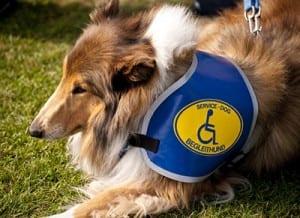
Many confuse emotional support dogs with psychiatric service dogs, but it’s not the same thing. The emotional support dog does not require special training, but the psychiatric service dogs are trained to provide specific services. They for instance do room searches or turn on lights for a person with PTSD, provide counterbalance, block persons experiencing a dissociative episode from walking into danger, and so on.

Emotional support dogs provide their handlers with relief from isolation, daily structure, an increased sense of self-esteem and purpose, motivation, and many other important things.

These dogs are not covered under the Americans with Disabilities Act, but they are covered under the Fair Housing Act and Air Carrier Access Act.


What is a therapy dog?

A therapy dog is trained to provide affection and comfort to people in need. These are often pets who have undergone special training to accompany their owners to hospitals, retirement homes, nursing homes, and many other areas. Some live in a facility, and some are specially trained to work as comfort dogs at disaster areas. 

A great example of comfort dogs is the 9-11 disaster where 318 dogs and their handlers worked around the clock.

There are three basic kinds of therapy dogs:

Therapeutic visitation dogs visit hospitals, nursing homes, and other places where a visiting dog can comfort and motivate people. These are often volunteers.

Animal assisted therapy dogs assist therapists with physical and occupational therapy. They often work in rehabilitation facilities.

Facility therapy dogs live in a facility, often a nursing home, and are trained to help patients with Alzheimer’s and similar.

In many areas therapy dogs must pass the Canine Good Citizen Test. There is also a therapy dog certification test. Therapy dogs and their handlers are not covered by the Americans with Disabilities Act.

There is an important difference between therapy dogs and assistance dogs: while assistance dogs should be left alone to perform their job, people are encouraged to approach and pet therapy dogs.

Different types of assistance dogs

Dogs perform many important functions in society, and there are many different kinds of working dogs. Assistance dogs enhances people’s lives through helping with tasks their person would have trouble completing on their own.

service dogAssistance dogs are divided into three categories:

Guide dogs  help the blind and visually impaired. These dogs help humans through guiding their handler past obstacles, stopping at stabs and curbs, and negotiating traffic. The handler gives commands, but it is the dog’s responsibility to ensure the team’s safety.

This type of job can be difficult and requires a lot from the dog, because doing the job to keep the handler safe can require disobeying direct commands.

Hearing dogs  help the deaf and heard of hearing. They assist through alerting their handlers to sound, and are trained to make physical contact with their handler, leading them to the source of the sound. These dogs are commonly trained to react to doorbells, alarm clocks, telephones, crying babies, and similar.

Service dogs  help people with other types of disabilities. Some are trained to work with wheelchairs, some are medical alert dogs, others help children with autism. There is a wide range of task performed by service dogs and they are often trained to open and close doors, turn on lights, bring objects, provide balance, and many other things.

Assistance groups are recognized by the ADA. Their handler have the right to bring them to any place that is open to the public

Pets gaining legal status in France

France has the biggest pet dog population in Europe with nearly 9 million dogs. Up until now, the country’s legal system has shared the view on pets held by many other countries including the USA; they are considered furniture that moves.

Most pet lovers would disagree with the description. It is apparent that pets have feelings, and they’re not furniture. Now a petition with 700,000 signatures has inspired a change in the French legal system, giving cats and dogs better legal protection from animal cruelty. The new ruling is also expected to help courts decide custody battles with pets involved.

The new legal status describes pets as “living beings capable of feelings.” This new stance might also have an impact on the treatment of other types of animals. Taken to the next level, it might affect animal testing and other areas.

Get a food bowl that fits the size of your pet

Get the right size food bowlHave you ever noticed that if you put food on a big plate it looks so little, and by the time the plate is full, the portion is enough for dinner as well as lunch the next day? The same principle is true for dog bowls.  A big bowl makes a correct size portion look tiny, and it’s easy to put on too much.

In 2013, the University of Tennessee’s College of Veterinary Medicine made an experiment with 54 dogs and their owners. Four combinations were tested:

  • Small bowl with a small scoop
  • Small bowl with a large scoop
  • Large bowl with a small scoop
  • Large bowl with a large scoop

Just as one might guess, the servings in the small bowl with the small scoop were significantly smaller than all other combinations.

Does it matter?

Yes. Obesity is a health problem on the rise for pets as well as people, and keeping track of portions is especially important for pets eating dry food. Kibble is generally high in calories, and just a few extra pieces each day can make a small pet gain weight quickly.

Good ideas are to use a graded measuring cup, and to use the large bowl for water. Many pet owners have a small water bowl and a huge food bowl, but pets need much more water than they do food.

Everyday items that should be kept out of reach

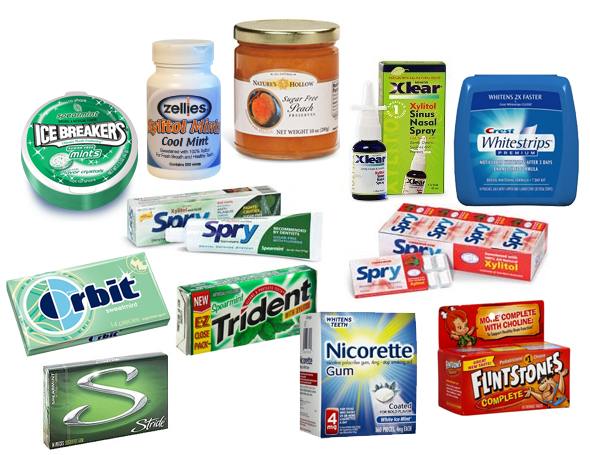
Xylitol is poisonous to petsBy now most pet owners know dogs and cats shouldn’t have chocolate, raisins, onions, and macadamia nuts. Many other common every-day objects are also very dangerous to cats and dogs, and they’re so small and common it’s easy to forget they’re easily available in an open purse or on a table.

Human medications like Advil, Motrin, and Tylenol are present in almost every home, and very dangerous to pets. The acetaminophen in one Tylenol is enough to kill a cat or cause severe liver problems in a dog.

Asthma inhalers can also pose a problem if a pet chews on them. If a dog were to bite through the shell, the substance inside is enough to cause an acute, life-threatening poisoning.

Most chewing gums and mints contain xylitol. Xylitol is also common in chewable vitamins, sugar free candy, and nicotine gum. Xylitol is very toxic to dogs.

Also look out for all forms of nicotine. Cigarettes, smokeless tobacco, e-cigarette cartridges and fluid, nicotine gum, lozenges, anything with nicotine can potentially kill a pet.

Another common item that can be found in many cars, purses, and backpacks is hand sanitizer. These products contain lots of alcohol and can potentially cause coma and death in pets.

Prevention is naturally the best. Create good habits with putting potentially dangerous things away. If you still think your pet got into something poisonous, call your veterinarian at once. If the cat really ate something they shouldn’t have minutes can matter, and the sooner you get the correct diagnose the easier, safer, and less expensive it will be to treat your pet.