
Would you like a cat with your new home?

In Russia it’s considered good luck if a cat enters a new home ahead of the owners. It’s a nice tradition, and cats with their keen senses can probably say more about a building than humans, so the Russians might be on to something.

Now Russia’s biggest bank – Sberbank – attempts to take advantage of the tradition through an unusual promotional campaign: the bank offers to deliver a cat to the doorstep of new mortgage clients. The campaign is limited to the thirty first new mortgages, and CNN reports that a few customers already signed up.

Friends of cats might worry that everyone who buys a home isn’t cut out to be a cat owner, but that shouldn’t be a problem – the cats are only on loan for a couple of hours.

Bank customers can choose from ten cats with different breeds, and The Financial Brand reports the cats belong to bank employees. On the big day, a branded van with a giant cat logo comes to deliver the pet.

The bank says, “Order a cat for your housewarming and bring happiness and luck to your home.” It is unknown what happens if the cat refuses to enter the house…

The video below is in Russian, but expresses the sentiment of the campaign even without understanding the language, and who can resist watching cats?

//youtu.be/4boS_2z5KKg

Keep laundry detergent pods out of reach

Laundry detergent pods are convenient for making sure you use the right amount of detergent. Just make sure you store and keep them out of reach of pets and children – they are highly toxic.

As an adult it’s often hard to predict what will be dangerous, because we think like adults. We know laundry detergent goes in the laundry machine and not in the mouth. Unfortunately, the pods can look like candy to small children, and like toys to pets. They look fun to kick around, hold between the paws, and chew on.

Laundry detergent pods are dangerous to pets and children

But, isn’t the detergent in plastic?

Not exactly. The pods are designed to hold detergent until the shell comes in contact with moisture – such as the water in the laundry machine or your child’s or pet’s saliva. The detergent in the pods is highly concentrated and much more dangerous than most regular detergents.

When released, the detergent can cause life-threatening damage to the respiratory system, burning of the stomach and trachea, and eye damage.

Symptoms of contact with a pod include drooling, vomiting, difficulty swallowing, and respiratory problems. Many times, the pod is gone – already swallowed – and it’s difficult to know what’s causing the symptoms.

The problem is easy to remedy. Keep your detergent in a secure shelf where your pets and children can’t reach it. Never leave a pod lying around the house, not even on top of a laundry pile.


Today is “Take your Cat to the Vet day”

Cats have personalities just like peopleThis sounds like a bizarre holiday, but there is a reason for it. Most humans visit the doctor and dentist annually. Dog owners are generally pretty good with taking their pooches to the vet at least once a year for a check-up. Cats, on the other hand, are often forgotten.
Whether it is because they’re so independent, seem so healthy, or put up a fight when it’s time to get in the carrier, many cats only get to see the vet when there’s something evidently wrong with them. This results in needless suffering and high veterinary bills that might have been avoided if kitty had gotten routine checks.

Cats are excellent at hiding when something is wrong with them, and by the time an owner realizes their kitty is sick, the problem has usually escalated.

Most dogs get annual tests for worms, regular inoculations, and blood screening. Cats need this too, so any problems can be caught early. Take your cat to the vet for a check-up and find any medical problems before they require extensive and expensive treatment.

Is your cat trying to tell you something?

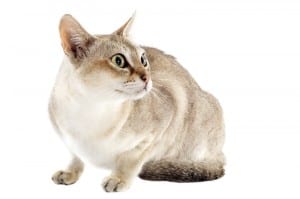
Singapura is the world's smallest cat breed.Cats might not be able to talk like humans do, but they do communicate. Unfortunately, we often misunderstand the attempts of communication and think the cat is “bad” or just weird.
Here are some instances when kitty might be trying to tell you something.

From time to time, cats chow down on strange things, but if your cat eats cardboard, plastic, paper, or something similar and looks at you when he/she starts eating, it’s probably a call for attention.

When kitty deliberately knocks things on the floor it’s not to mess with you or a sign of disliking your decorations. This too means that the cat wants attention – which could mean food.

A cat presenting its butt to you might not seem like a good thing, but in cat language this is a huge compliment. It means that you’re a trusted friend.

Black cat appreciation day!

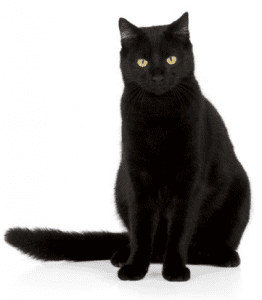
Black catIn many cultures black cats are seen as good luck. Here in the US they’re sadly more associated with bad luck, and they have a hard time finding homes. Cats with black coat are nearly five times as likely to be put to sleep in a shelter than cats with another color.

Black cat appreciation day is intended to change the myths that keeps them from being adopted. Many people don’t understand cats. Some fear them, or even hate them, and keep spreading misinformation about them.

Not everyone has to like cats, but distancing oneself from a species because of myths and erroneous information is a loss both for the person and the cats.

Here are some fun facts about black cats:

  • According to the Japanese and the British, black cats are good luck
  • In Scotland, the black cat is believed to bring prosperity
  • Black cats are believed to be the best ship cats, because they bring good luck
  • Black cats are actually just like all other cats, except for being black. They’re just as sweet and cuddly as all other cats.
  • Black cats are like miniature panthers. They’re natural ninjas. Having a ninja panther is cool.

If you have a black cat, or adopt one, take some photos and share on social media. Together we can debunk the myth about black cats being bad luck!

International Homeless Animals Day

Today is international homeless animals day and organizations around the world come together to inform about pet overpopulation. Today, you can count on seeing adopt-a-thons, spay/neuter clinics, microchip clinics, and many other activities. 

You might not think the situation is all that bad in the USA, but every year pet shelters are overrun by homeless cats and dogs. The sad consequence is that millions of pets are put down in shelters, often after just a couple of days. There are all sorts of pets in shelters. You can find pure bred dogs, mutts, cats, birds, rabbits, and even chickens. There are puppies and kittens as well as adult animals. Many are scared and confused, and don’t understand why their family isn’t there for them anymore.

If you’ve thought of adding a furry friend to your family, this might be a great day to do it. Go to your local shelter or visit petfinder.com to see available pets near you. Even if you don’t want or can’t commit to a pet, you can help by spreading information, sharing pets on social media, or bringing supplies to a local shelter or rescue.

Ever wonder how far away your cat goes?

The Cat Tracker is a new mapping project that encourages cat owners to put GPS collars on their cats in order to monitor their habits. The information can give new insight into cat behavior, and help conservationists save wildlife. Anyone in the USA, New Zealand, or Australia can participate. 

There are at least 95 million pet cats in the USA and millions more feral cats, and ecologists are concerned about their impact on wildlife.  The project will show whether cats in general kill wildlife routinely, or if just some cats engage in this. It can also help show whether cats that do kill and eat during their outdoor adventures have a higher incidence of parasites, and if these parasites are dangerous to humans.

The project will also track cats’ habits – some have been known to live with more than one household – and how large their areas are. A similar project tracked a cat with a home range of more than 1,300 acres. Does your cat stay close to home, or does he/she roam?

In order to participate in the program, the cat must be yours, and it needs to spend time both indoors and outdoors. Naturally, local leash laws must be observed.

If you want to learn more about the cat tracker project, click here!

Children reading to shelter pets is a win-win scenario

dog smallMany children have problems reading. The school environment can be intimidating, and it’s no fun to constantly be corrected. At the same time, shelters are overcrowded with pets yearning for some human affection. The connection between reading problems and shelter pets might not be perfectly clear, but bear with us. It’s there.
The children need practice and purpose in an environment that won’t judge them. The shelter pets need socialization and human interaction.

Turns out that children love to read to animals, and particularly cats are soothed by the rhythmic child voice.

Organizations around the country now offer programs where children are invited to read to animals. In many cases the same child comes back over and over again, and might even rehearse the story before presenting it to the pet.

These programs are particularly beneficial for many autistic children who find the animals a great source of support. Researchers at Tufts University claim the events lead to an increased use of language and improved social interactions.

Sunshine story: Hero cats protect their owners

There are many amazing stories about dogs saving people from everything from house fires to traffic accidents. Cats are more rarely featured in such news. Smudge is a hero cat who shows that cats do care about us, probably more than we know.

Smudge’s owner is Ethan; a five year old boy. Ethan played in the yard with his little brother when three other kids started picking on him, taunting him. His mother saw them from the house, and saw Ethan trying to ignore them.  One of the bullies pushed him to the ground and Ethan’s mom ran for the outside, but Smudge beat her to it.

The cat flew out from under the car and jumped on the bully’s chest. The boy stumbled backwards, burst into tears, and fled. Ever since then, Smudge sleeps by Ethan’s bedroom door, keeping guard.

Slinky Malinki is another hero cat who recently saved his owner. Slinky’s mom has a back problem and was prescribed morphine. No one knew that she had a strong reaction to the drug, and drifted in and out of consciousness for days.

Slinky did his best to get the neighbors’ attention. He tormented their dog and tapped on their windows until they realized something was wrong. Ever since, Slinky keeps a close eye on his human. If he doesn’t see her for a couple of hours he’ll go find her, and tap on her arm until she responds.

International Cat Day

CatToday is a good day to take some extra time to play with your cat – August 8th is International Cat Day, celebrating our feline friends. The day was first celebrated in 2002, and has become a yearly festivity.
Around the world, an estimated 500 million cats frolic in homes and gardens, regardless of country and climate. In the USA, there’s almost 100 million owned cats. Around 46 percent of US kitty-households have one cat, 31 percent share their home with two cats, and 24 percent have three or more cats.

Having a cat in the household has been proven to relieve stress, depression, and anxiety. Cats are particularly good for the heart – over a ten year period a cat owner is 30 percent less likely to die of a heart attack or stroke than a person without a cat. They may even lower the risk of cancer.

If you don’t already have a cat but you’ve been thinking of getting one, celebrate International Cat Day with going down to your local shelter and giving one a new home.

What’s up with cats and scratching furniture?

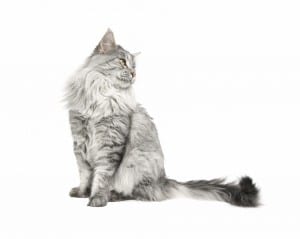
maine coon catCats love to scratch things. It removes the dead outer layer of their claws and keeps their claws sharp and conditioned. It’s a way for kitty to mark territory – cats have scent glands on their feet, and the scratching leaves a scent mark. Scratching also helps cats stretch while flexing their feet and claws.

Unfortunately, we humans don’t share the cat’s enthusiasm over scratching up the new sofa.

Observe in which rooms your cat likes to scratch, and on what. Then, substitute that object with something similar that’s okay for both you and the cat. For example corrugated cardboard, a log, or a carpeted post.

Cover the forbidden object in something cats don’t like, for example aluminum foil, cotton balls with perfume, or double-sided tape. Then, place the new and acceptable object close by.

Patience is key. Let your cat get used to the new acceptable object, and move it gradually – nor more than 1 inch every day – to a spot more suitable to you. The closer you can keep it to the cat’s preferred location, the bigger the chance this will work in the long run.

Keep the unappealing foil, tape, or cotton balls on the forbidden object until the cat has used the acceptable object in its right place for at least a month.

If you cat likes cat nip, looking for a scratching post with catnip hidden under the surface might help motivate him or her to use the “right” object for scratching.

Five interesting cat facts

Singapura is the world's smallest cat breed.Cats are great companions, but their behavior can be puzzling. For example, why do they love cardboard boxes so much?

In the wild, cats like to claim locations as their own, and they like to be in enclosed spaces. This is what we see today when a cat climbs into a narrow cardboard box.

Computer keyboards also hold a special allure to cats. It is a thing to claim as theirs, laptop keyboards are often warm and comfy, and humans touch keyboards all the time, which makes them special.

And why do cats always climb on the one person allergic to them?

Many cats gravitate towards people who are allergic or don’t like cats. This seems counterproductive, but cats play it safe and often choose to approach people who aren’t trying to get their attention. When a cat doesn’t know a human, gestures and calls can feel like pressure to perform, or even seem threatening. A person who doesn’t want a cat on their lap can be interpreted as safer.

Why do cats drink out of glasses or even the sink instead of the water bowl?

This too comes from their behavior in nature. Cats will avoid drinking from a water source close to something dead, because the water can be contaminated. This instinct remains. They will choose water as far away from their store-bought food as possible, to make sure it’s clean and healthy. Put the water bowl in another corner than the food bowl, and kitty will probably like it better.

The Majestic Pallas Cat

Pallas cat image from WikipediaThe Pallas cat isn’t your average house cat; these furry felines are native to the steppe regions of Central Asia where they live on high altitudes. They are solitary and spend their days in caves or rock crevices, coming out to hunt in the late afternoon. The Pallas cat is rare and doesn’t do well in captivity.

No one knew there were Pallas cats in Nepal until researchers stumbled over them when looking for snow leopards high in the Himalayan mountains. They saw something scurry away that looked like half house cat and half snow leopard.

Now they’ve been recorded in the wild for the first time, by camera traps 14,000 feet above sea level. Turns out they’re smarter than we gave them credit for. At least one Pallas cat discovered the camera trap and went to investigate.

Is a cat cafe coming to a city near you?

Cats have personalities just like peopleCat cafés are wildly popular in parts of Asia, and the trend is spreading across the globe. The first cat cafe in the USA has opened in New York, and more are expected in San Francisco and Oregon later this year.

So, what is a cat cafe?

It is a loneliness-curing, stress-relieving cafe with cats.

The first cat cafe started in Taiwan over ten years ago, and the concept quickly spread to Japan where inhabitants embraced it. Today, Japan has at least 150 cat cafes.

These establishments are so popular that visitors have to book seats in advance. When Dinah’s Cat Emporium opened in London, 20,000 people water to enter a 30-seat cafe. They are booked until fall this year.

Many people in cities aren’t able to keep pets, but the human species still has an urge to be close to animals. The cat cafes offer a chance to sit down, relax, talk to other people who like cats, and maybe even pet one.

What do you think? Would you visit a cat cafe?

Singapura cats stay small even when they grow up

Singapura is the world's smallest cat breed.Everyone knows there are many dog breeds, and most people can identify at least a few even if they’re not all that interested in dogs. Did you know there are many breeds of domesticated cats as well?

The Singapura cat is the smallest domesticated cat breed, and adult females can weigh as little as five pounds. Adult males usually weigh between six and eight pounds.

As the name hints, the breed was believed to come from Singapore. However, the three founding cats traveled from the US to Singapore and were then brought back to the USA. One working theory is that the breed is a mix of Burmese and Abyssinian. It is still considered a legitimate breed, and according to the Cat Fancier’s Association, there is at least one legitimate cat from Singapore behind the breed.

The breed has become a tourism mascot for Singapore, they have statues of the cats, and have even hosted Singapura exhibits.

Besides being small, the breed is known for being active, affectionate, and easy to live with. They thrive on attention and love to play, but won’t get excited to the point where they bounce around the house and accidentally destroy things.

Most Singapuras have a stunning coat. Each hair has two shades; ivory at the base and brown at the tip.